
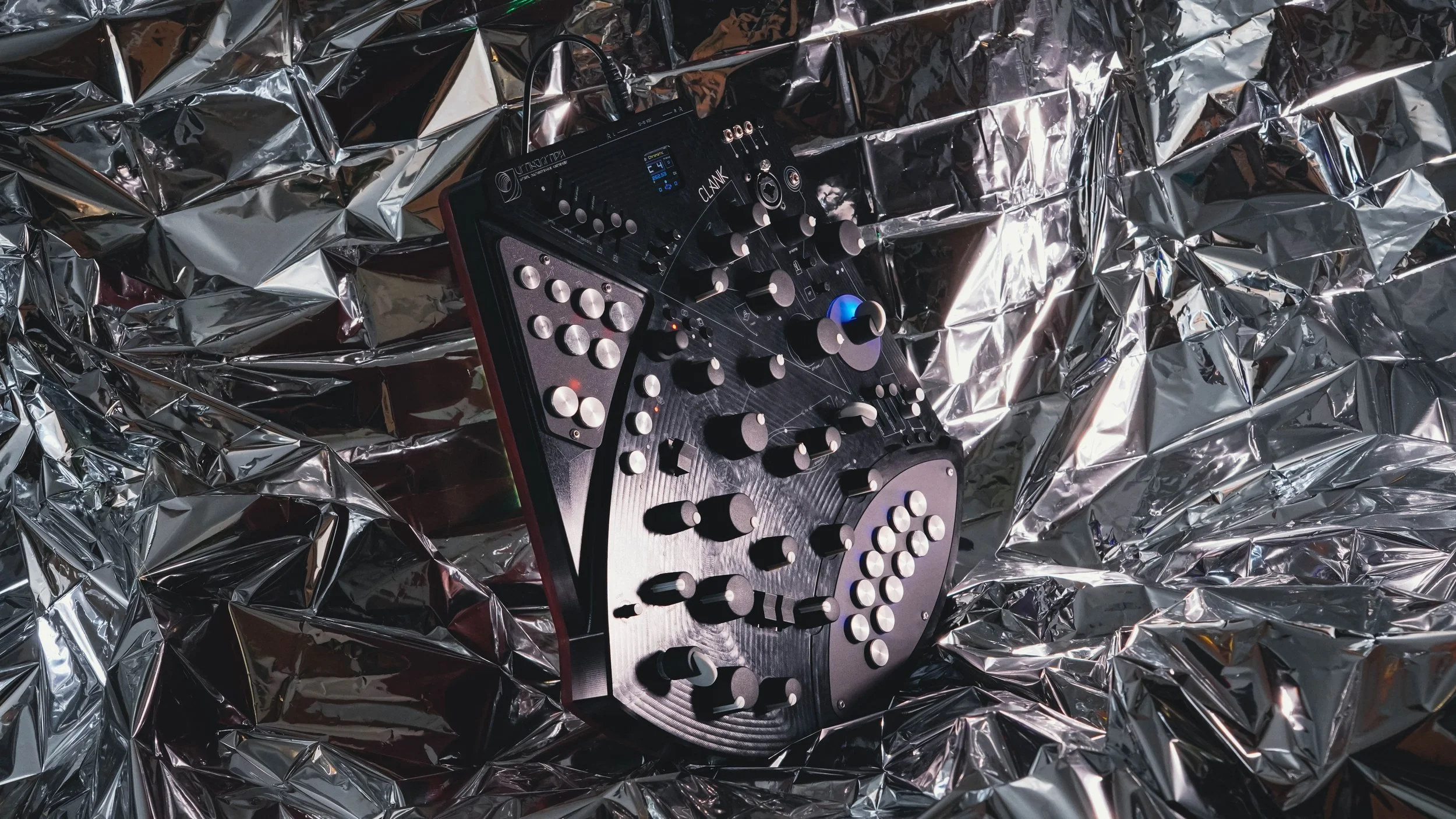


u-Tonal multi-expressive instrument
Uranograph is an electronic musical instrument that merges the expressive depth of classical instruments with the limitless possibilities of synthesis. A complete, self-contained world designed for live experimental performance, where every gesture, touch, and modulation is sculpted in real time.
Its capacitive tactile keys and instant note articulation encourage musicians to develop a deep connection with its behavior, refine their technique, and master its nuances.
With its ability to effortlessly reproduce microtonal notes, Uranograph is well-suited for exploring diverse musical expressions and cultural scales.
Its unique digital engine blends additive phase distortion with west-coast shaping, creating textures that feel raw, ancient, alien — like melodies echoing across a desert, or resonating in a distorted future city. Uranograph integrates an extensive 5-voice synthesis core that can be used in either polyphony or monophony, FX processing (both for internal and external sources), and a 2-reel looper into a seamless creative tool.


manual
photo blog
fw update

media


buy
keyboards
Uranograph's note keyboard serves as more than just an input device- it is the expressive heart of the instrument, providing a deeply responsive and flexible interface for performance and exploration of alternative tunings.
From the lightest tap to the deepest press, every gesture becomes sound. Bend, swell, brighten, or fade a note using only your fingers — just like on an acoustic instrument.
The keyboard becomes an extension of your expression — not just a controller, but your primary instrument.
performance Keyboard
With a harmonic aliasing system, in monophonic mode, each keyplate can trigger up to three voices in harmony, following custom intervals.
Create per-key chords, shifting textures, or stacked harmonics with modulatable density.
microtonal flexibility
Each key can be easily assigned to any pitch or pure frequency, providing complete flexibility in keyboard layout design and tuning.
Whether adhering to traditional Western tuning, exploring Arabic maqams, Indian ragas, or experimental microtonal divisions, Uranograph provides an extensive range of tonal possibilities.
An ideal instrument for non-standard tuning, enabling deep engagement with diverse musical traditions and avant-garde soundscapes.
play full chords from a single key

Uranograph features a dedicated control keyboard designed for dynamic, hands-on sound transformation. Unlike traditional mod wheels or faders, this touch-based control surface enables real-time interaction with synthesis parameters, allowing for expressive, gestural modulation.
The control keyboard is divided into three functional sections: Articulation, Octave Shift / Pitch bend, and ModKeys.
control keyboard
phrasing techniques
Three articulation plates provide instant access to canonical articulations found in stringed instruments:
glissando (smooth pitch slides between consecutive notes)
trillo (alternates between notes)
staccato (different envelope engine that shortens note duration and create percussive attack)
real-time modulation
Two ModKeys plate dynamically responds to pressure, enabling simultaneous control over multiple parameters.
By integrating expressive modulation gestures with the performance keyboard, players can shape fluid, evolving textures that respond organically to touch—enhancing expressivity and immediacy in synthesis.
synthesiscore
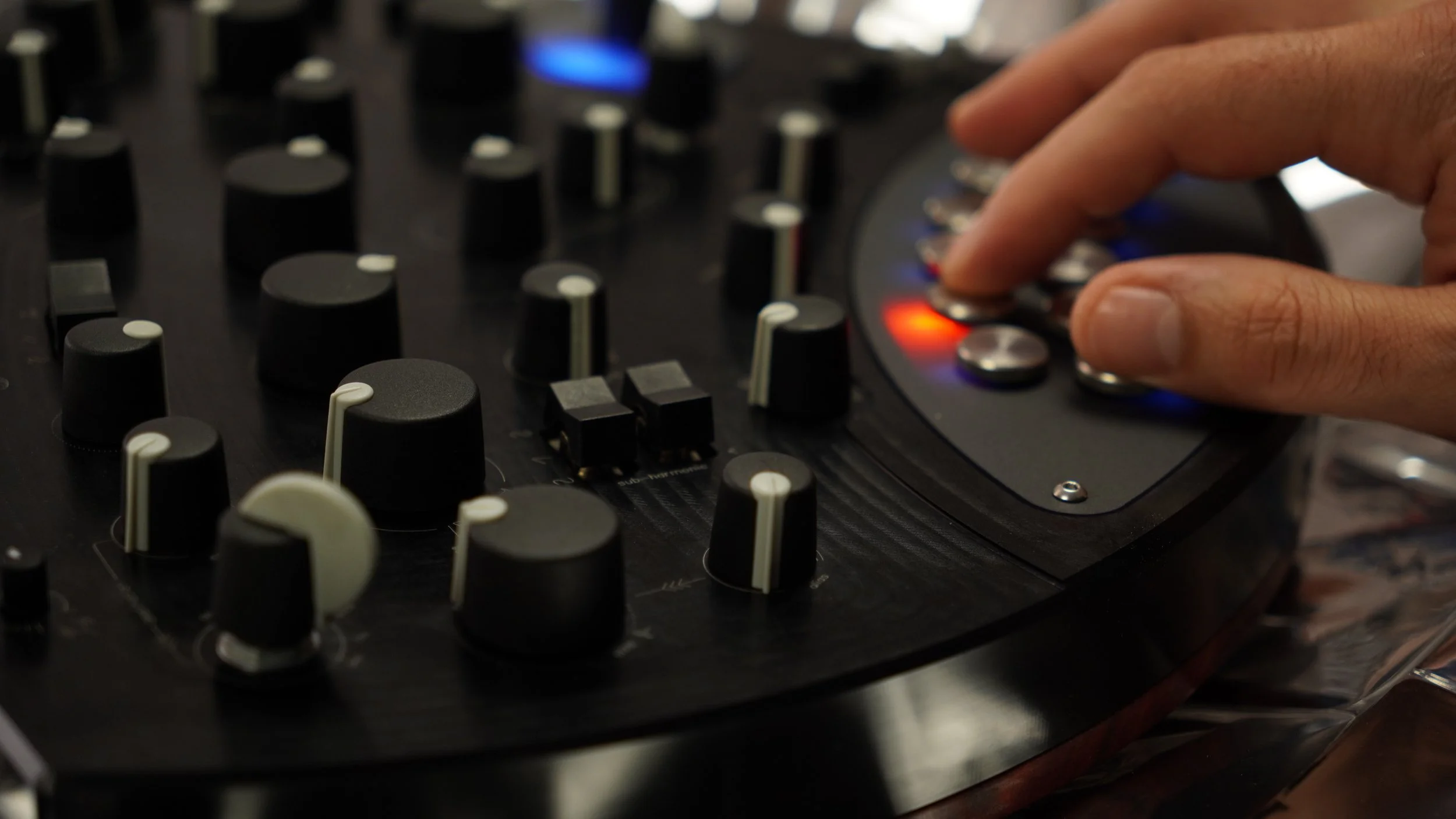
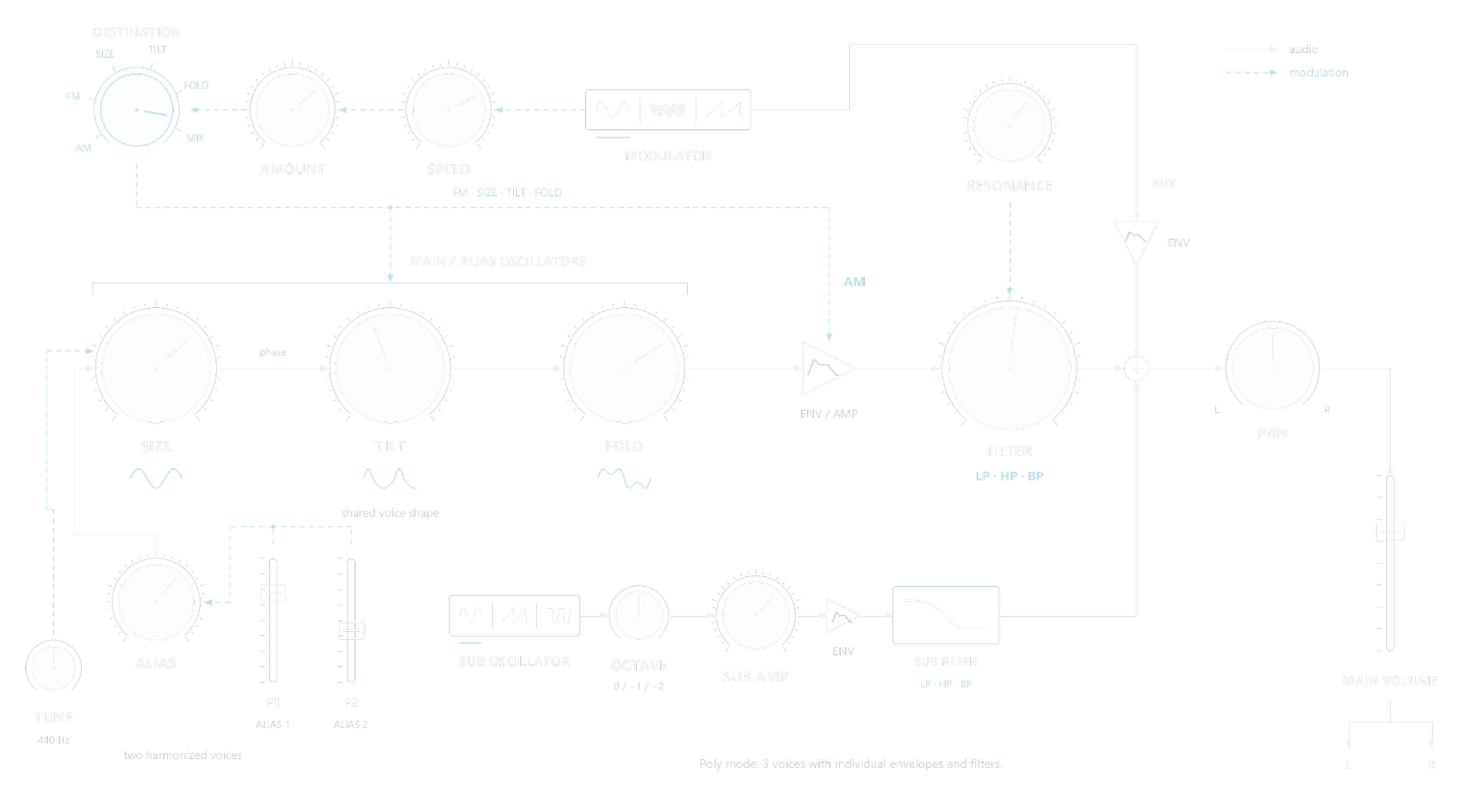
Uranograph’s digital engine is rooted in additive and phase-morphing synthesis, offering a unique and expressive way to shape its five oscillators.
At its core lies a sine wave oscillator, which serves as the foundation for tone sculpting. Through three key parameters — Size, Tilt, and Fold — this pure waveform can be bent, skewed, and folded into a wide range of timbres.
By manipulating phase rather than filtering harmonics, Uranograph produces sounds that evolve organically —
from warm, bell-like tones to sharp, metallic textures.
A dedicated sub-oscillator reinforces the low end, adding weight and depth.
Staying true to West Coast synthesis traditions, Uranograph also includes a secondary oscillator, which can operate as an additional sound source or as a modulator at both audio and low frequencies — expanding the instrument’s potential for complex, cross-modulated timbres.
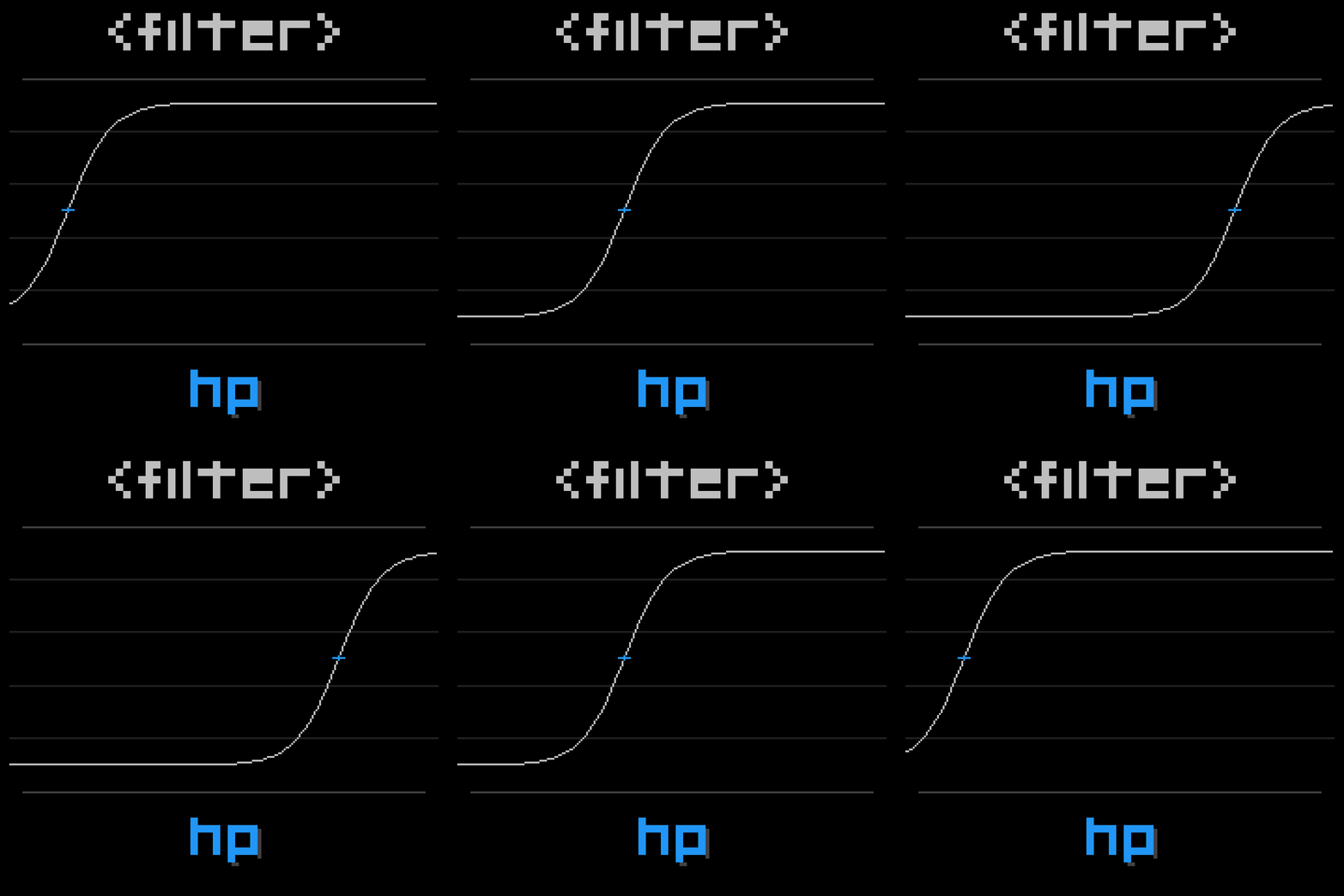
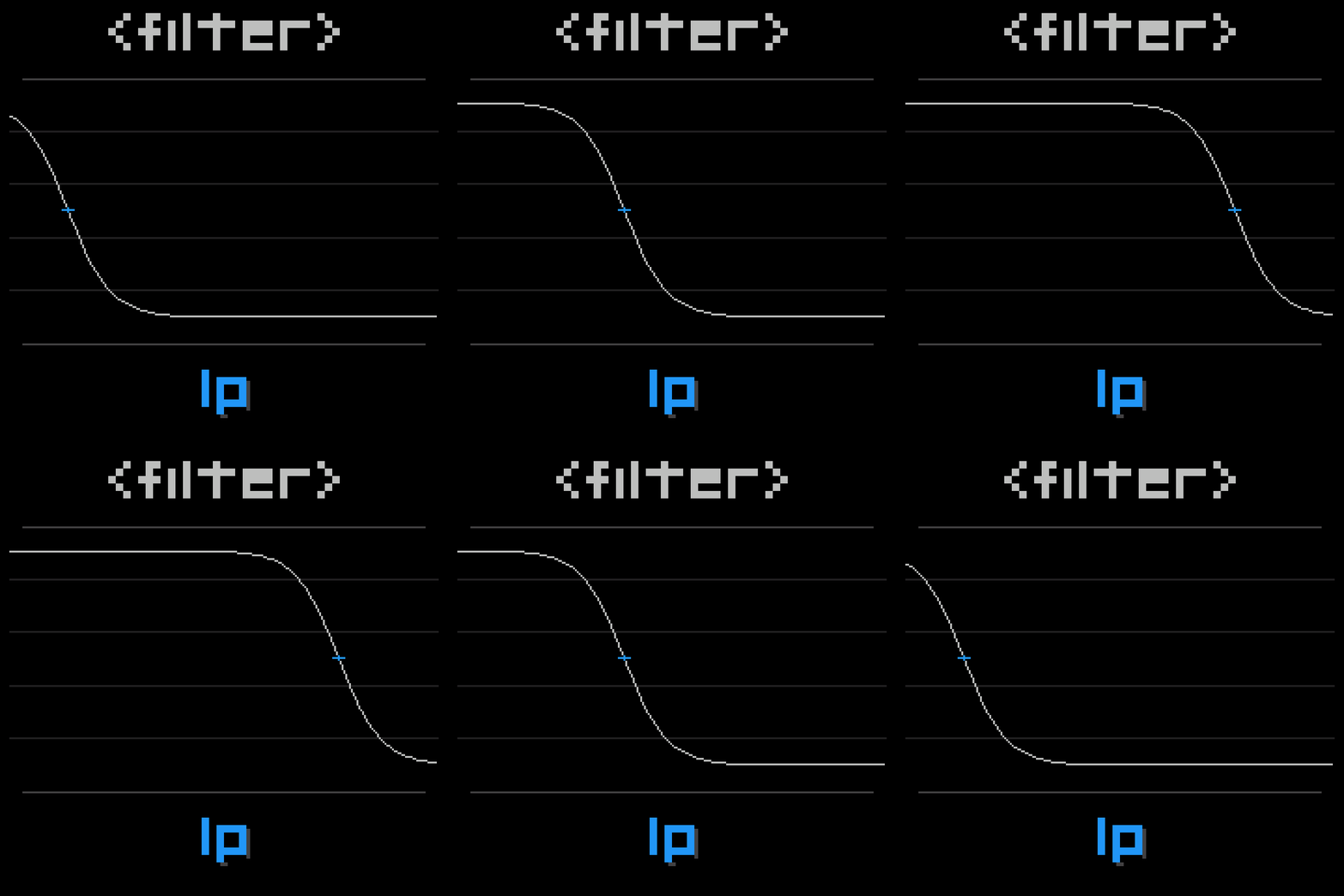
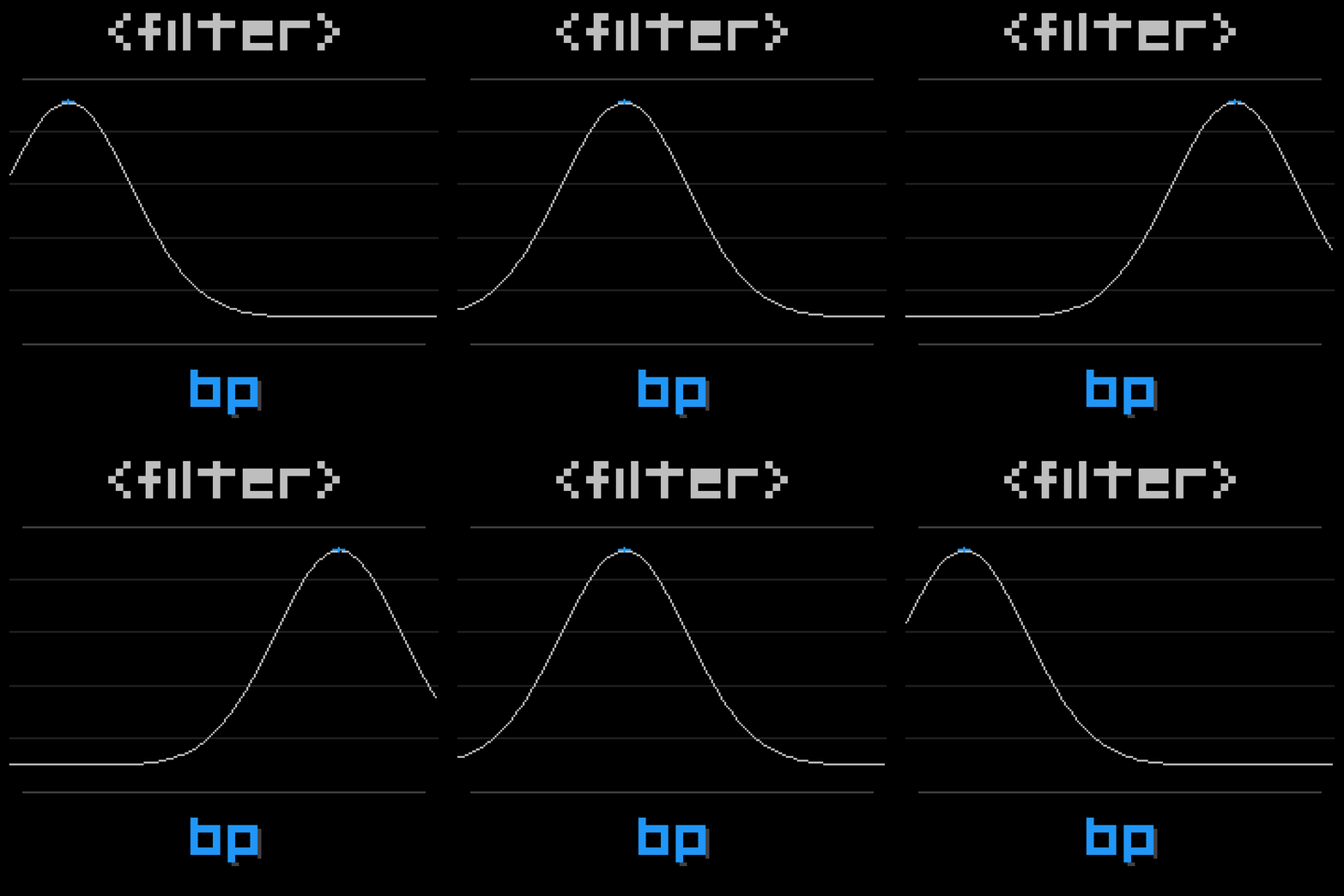
To further shape this rich harmonic palette,Uranograph now offers three filter modes: low-pass, high-pass, and band-pass. Low-pass softens brighter harmonics for warm, rounded sounds; high-pass removes low-frequency content for lighter, sharper textures; and band-pass isolates a focused range of frequencies for more vocal, nasal tones. Together with cutoff and resonance controls, these modes add another layer of expression, complementing the oscillator’s phase-morphing character with everything from subtle tonal shading to pronounced resonant sweeps.
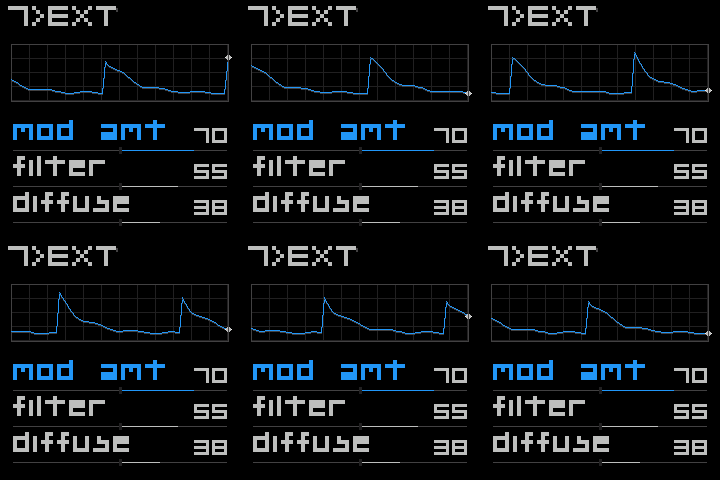
> expressive modulation
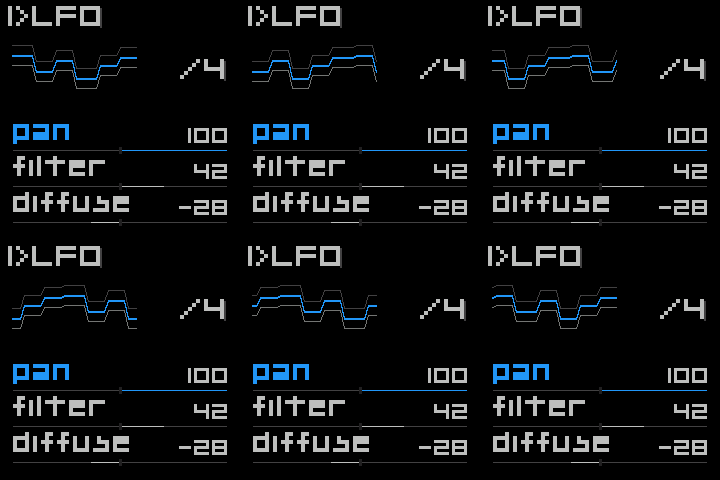
Uranograph brings together automatic modulation, touch and external control to keep sound in motion. Use the LFO for anything from slow tonal shifts to rhythmic movement, and envelope modulation for changes that follow the shape of each note.
P0 translates pressure on the performance keyboard into modulation, while the pressure-sensitive P1 and P2 ModKeys let you shape assigned parameters with your other hand. These gestures make timbral changes part of the way you play, alongside pitch and articulation.
An assignable CV input and MIDI CC control extend these possibilities to your wider setup, connecting Uranograph with modular sources, hardware controllers and DAW automation. From subtle variations to pronounced transformations, modulation becomes an integral part of the performance.
fx
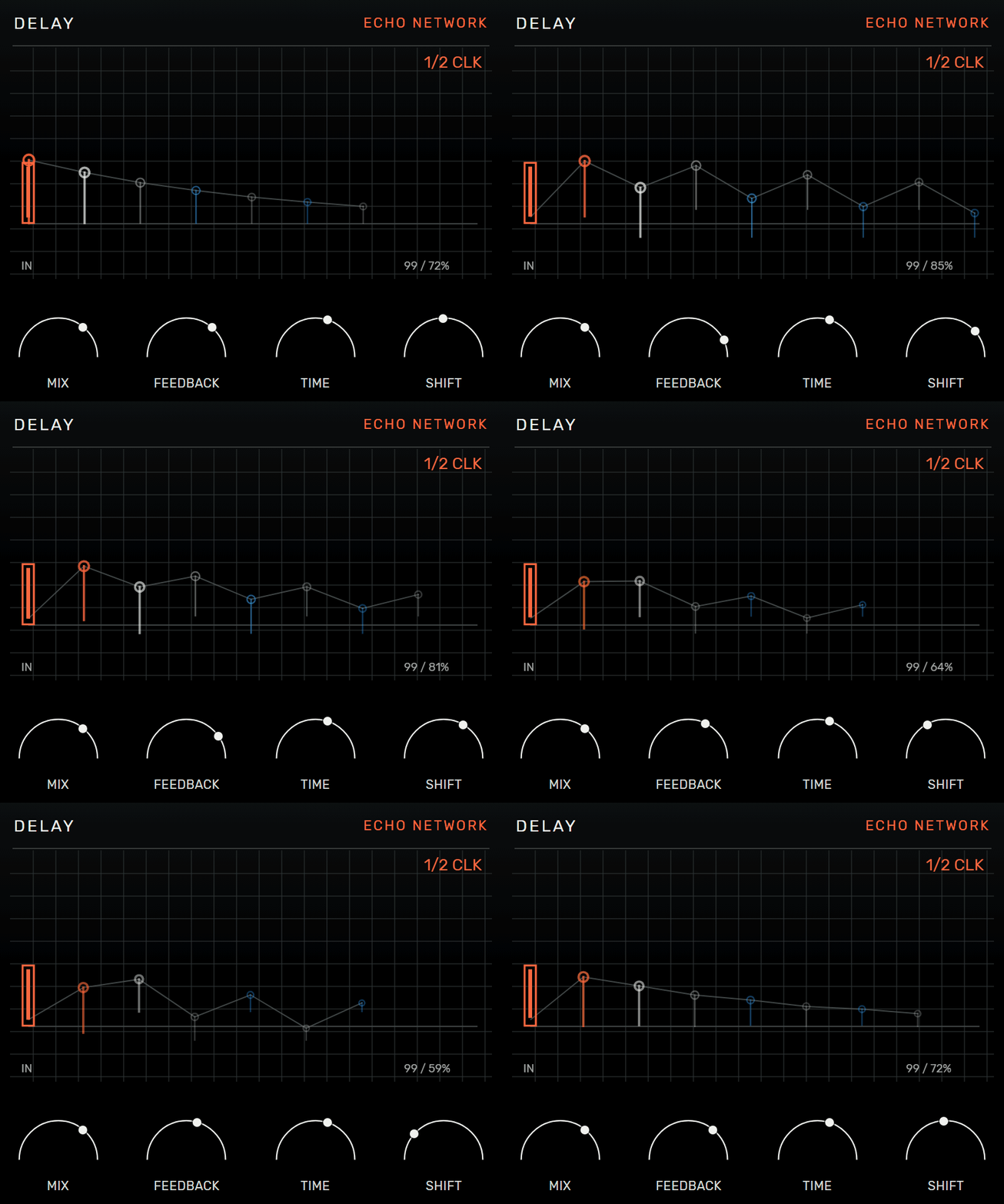
> stereo morphing delay
Uranograph’s stereo delay is designed for polyrhythmic textures and spectral shaping, merging classic echo behavior with Karplus-Strong-inspired resonation.
At longer delay times, tempo-synced repetitions interact with your playing to create interlocking patterns and layered rhythmic phrases. At shorter settings, the echoes merge into pitched resonances, adding string-like overtones and metallic coloration.
Delay Shift adds another dimension, creating polyrhythmic variations and expanding the stereo image. It brings greater rhythmic complexity and spatial depth to the repeats, turning simple phrases into intricate, surrounding textures.
The Regen control determines how strongly the echoes feed back into the delay, moving from delicate reflections to persistent trails and sustained resonant tones.
From rhythmic repetition to tonal reinforcement, Uranograph’s delay becomes both a time-based effect and an expressive extension of its synthesis engine.
> diffuse
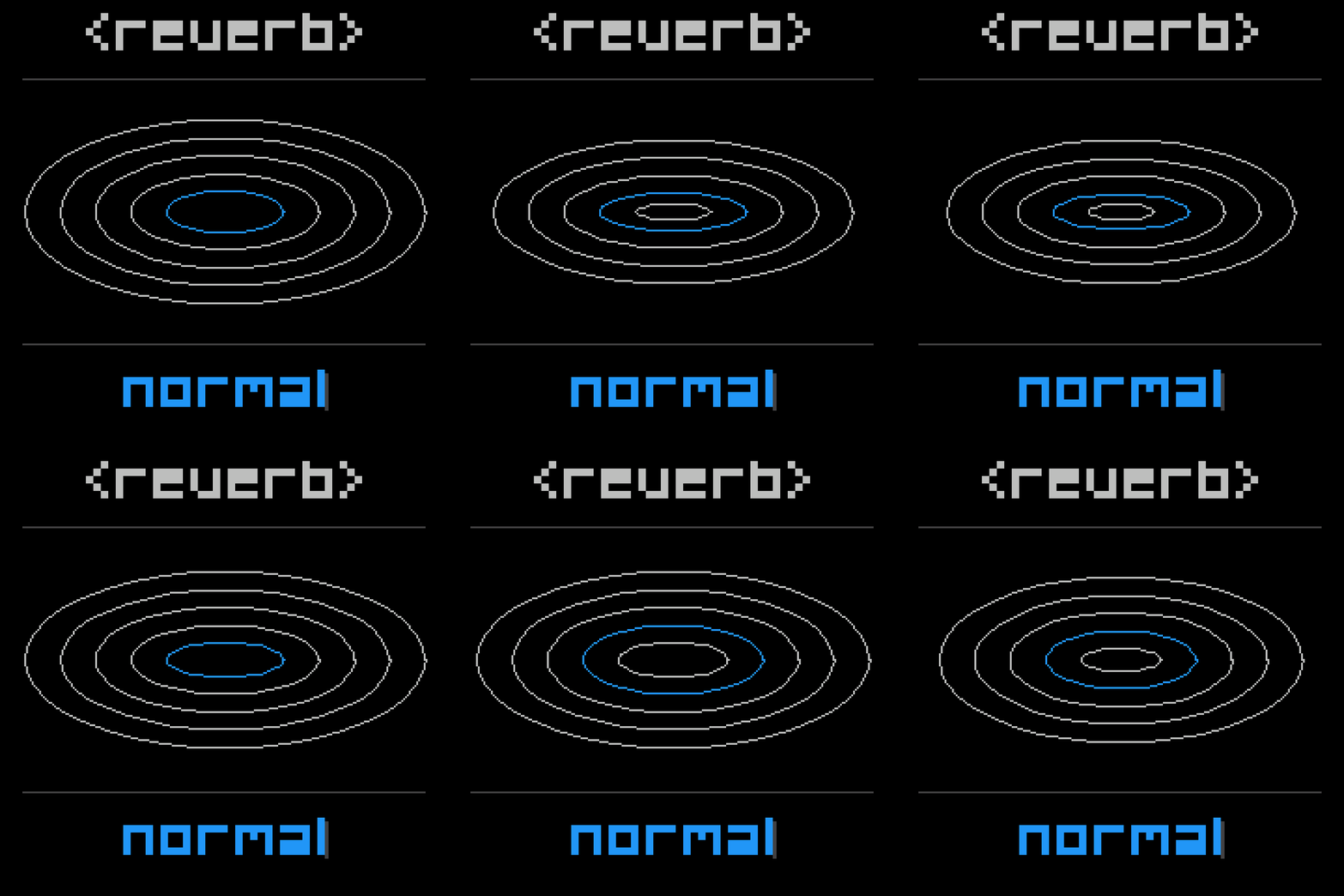
From tight, reflective rooms to vast, enveloping ambient clouds, Uranograph’s reverb brings expressive spatial shaping to your fingertips with a single knob.
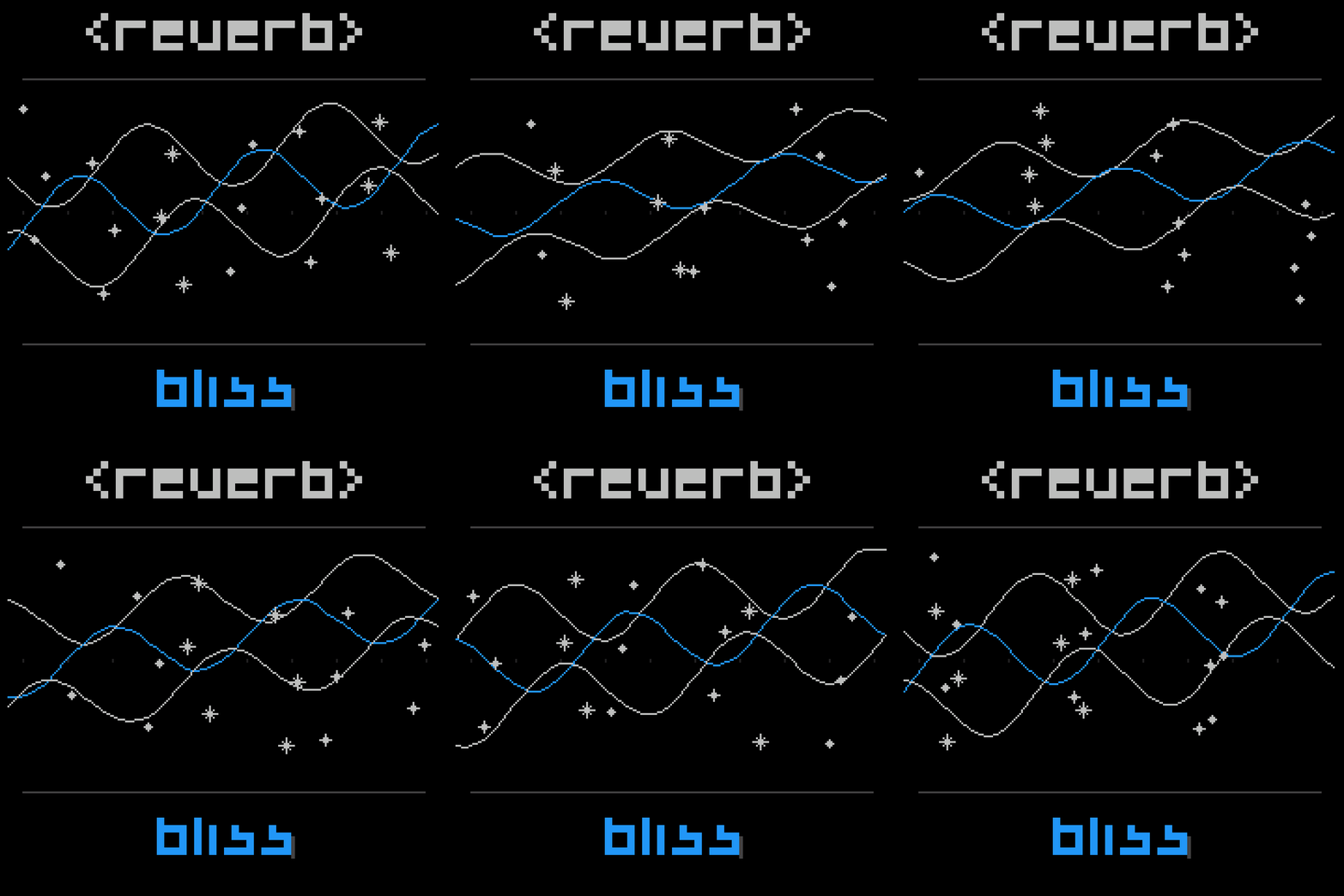
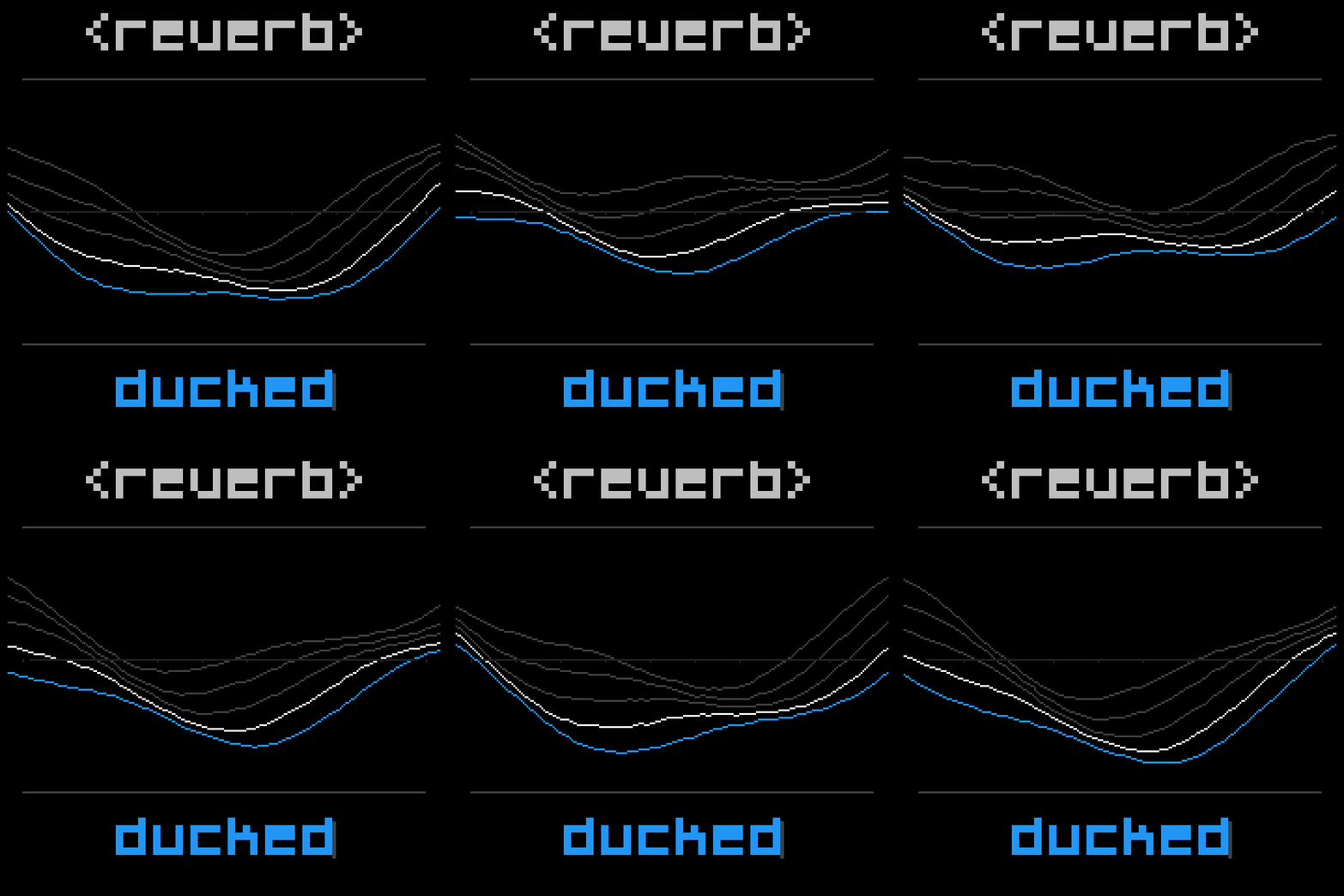
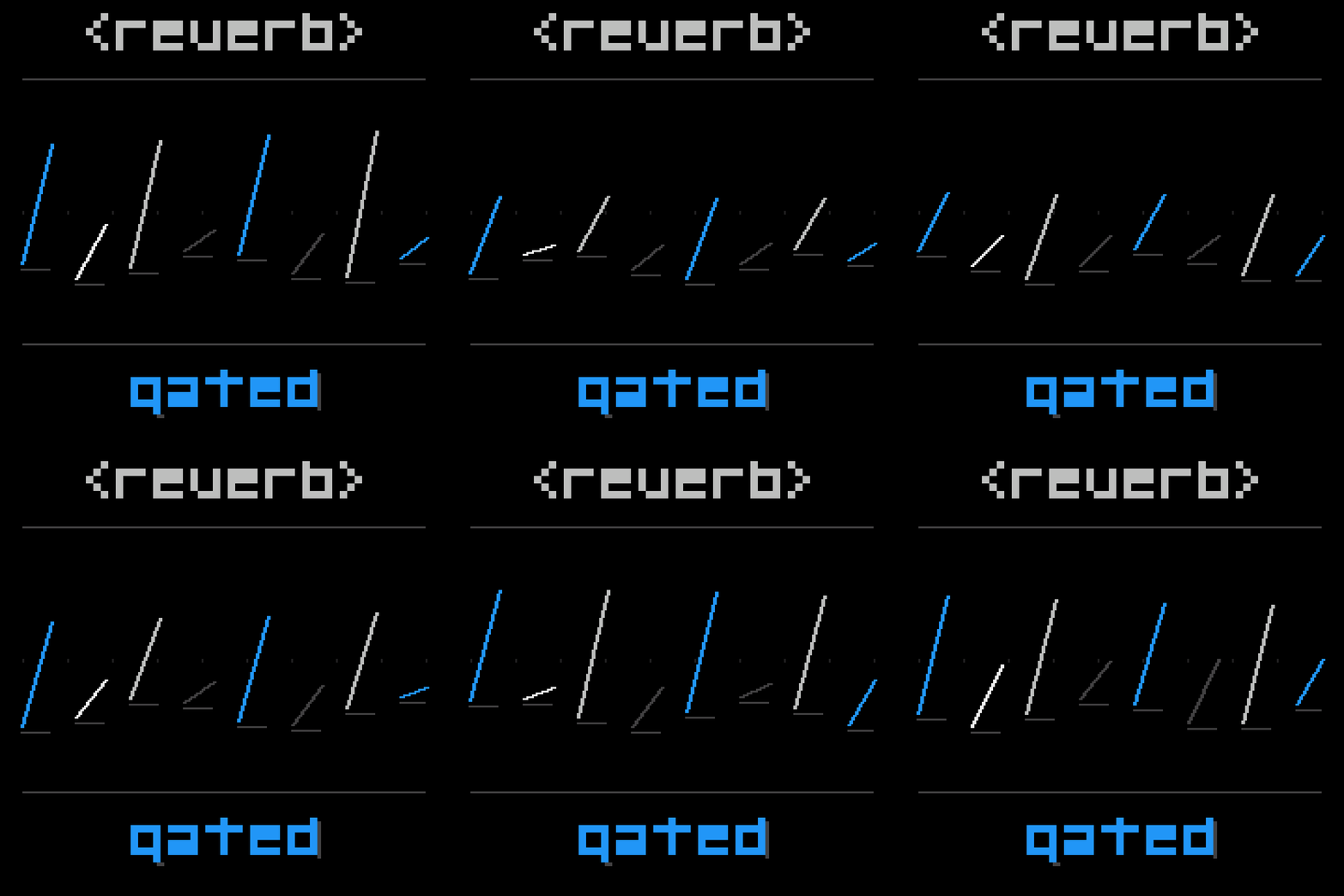
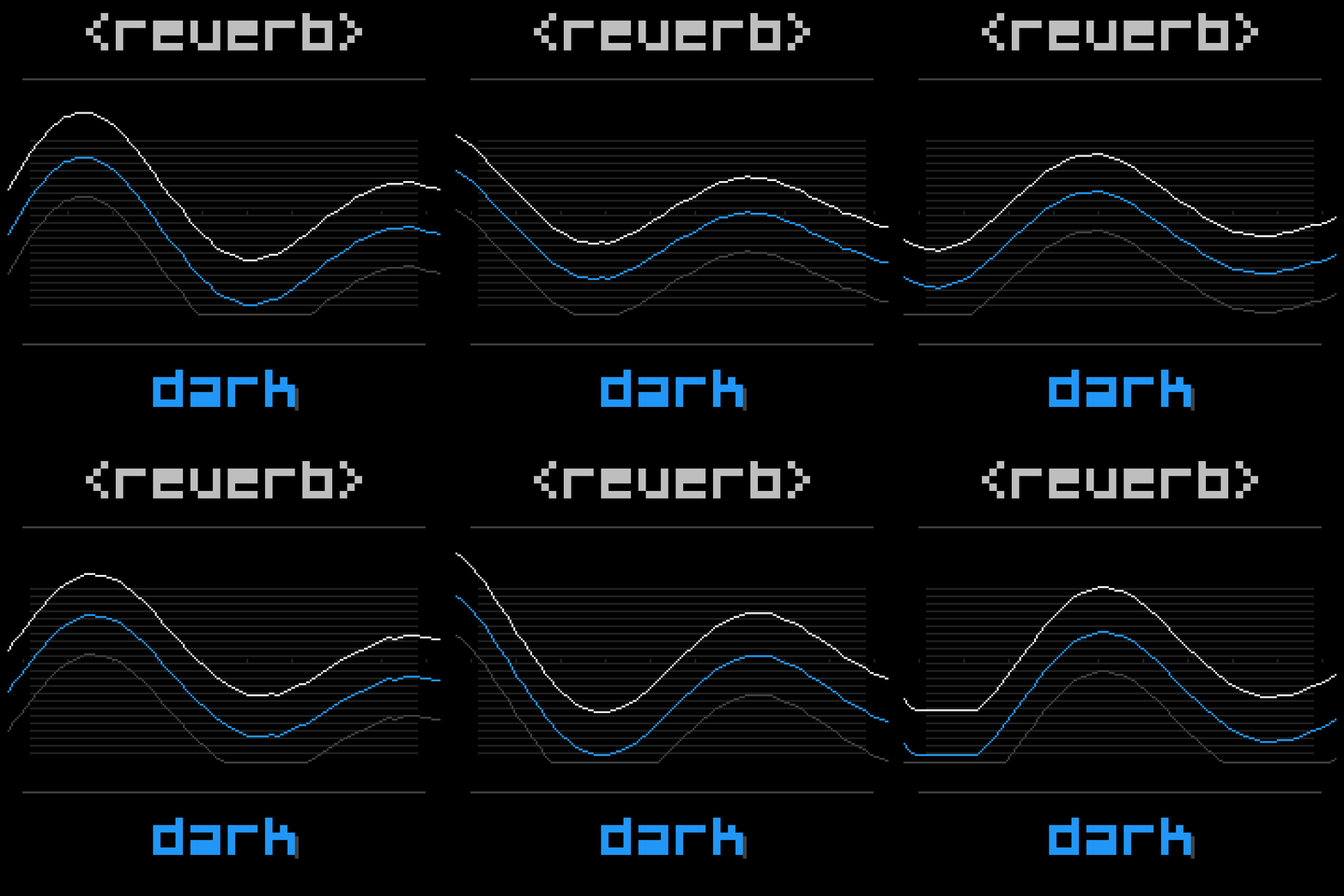
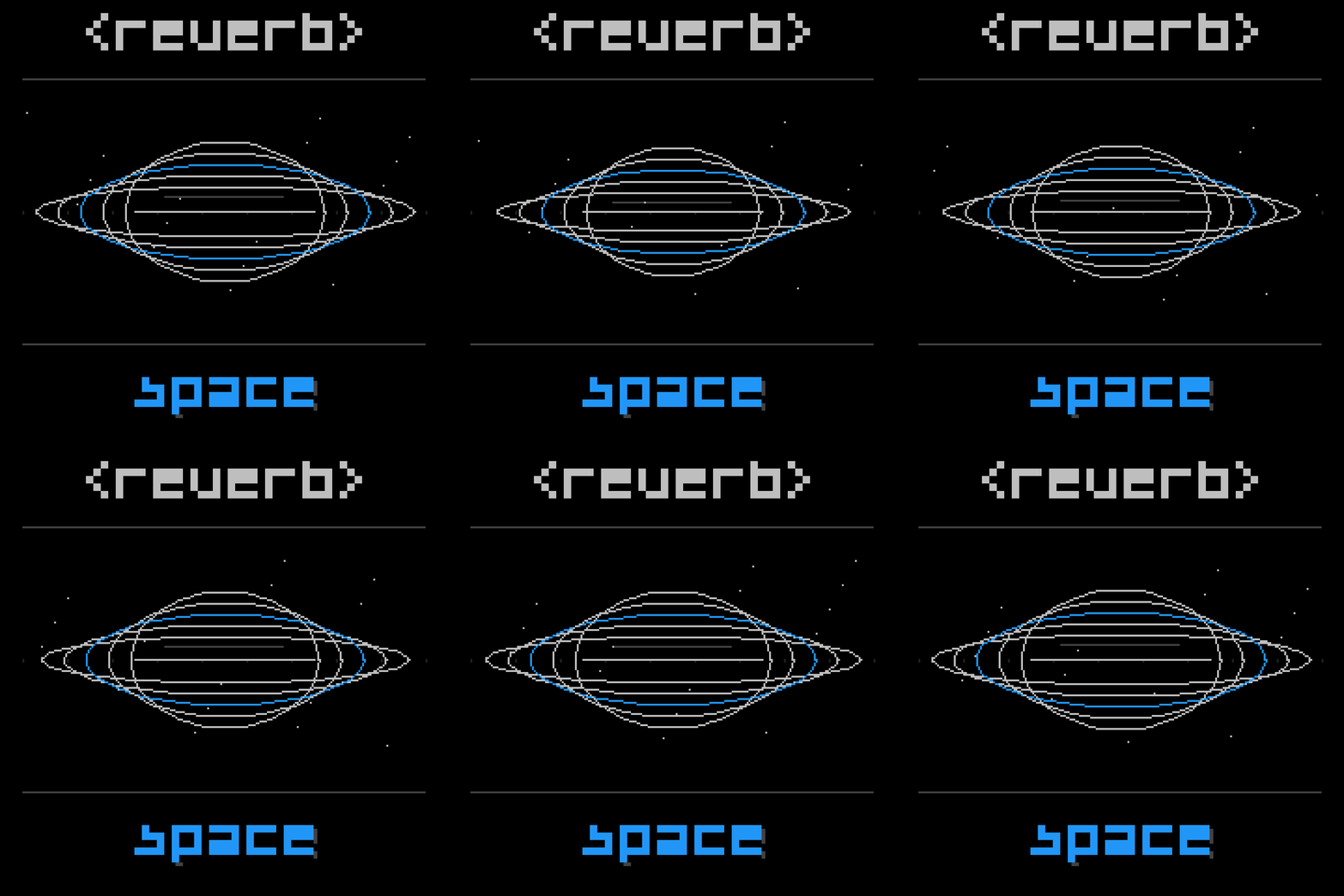
With six distinct algorithms — Normal, Bliss, Ducked, Gated, Dark, and Space — you can explore a wider palette of atmospheres.
Normal provides a versatile foundation for everyday depth and ambience, while Bliss opens the door to lush, immersive textures.
Ducked keeps the dry sound in focus, allowing the reverb to bloom as your playing recedes, and Gated creates abruptly cut tails for bold, rhythmic accents.
Dark lends a warmer, more subdued character, while Space stretches the sound into expansive ambient landscapes.
Whether you’re adding subtle presence, shaping percussive reflections, or immersing your sound in cinematic atmosphere, choose an algorithm to set the character and use the knob to shape its presence — making space an integral part of your performance.
> two reel tape looper
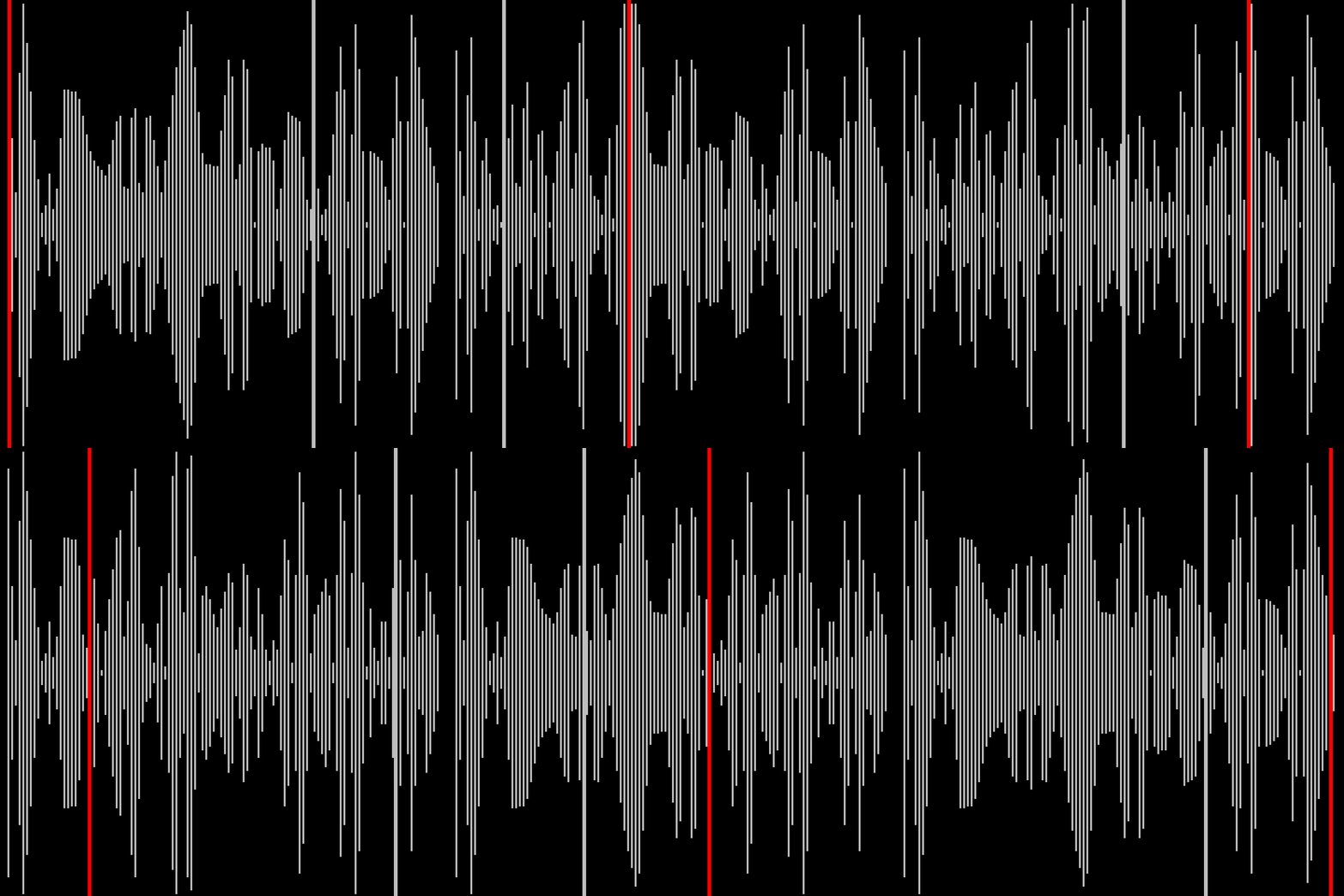
At the heart of Uranograph’s sonic capabilities is its dual-reel tape looper, designed for real-time recording, overdubbing and evolving soundscapes. Inspired by tape-based experimentation and Frippertronics, it turns a single gesture into the starting point for an entire performance.
Build interlocking phrases, sustain a background texture while exploring new sounds, or let successive layers gradually replace what came before. Each reel has independent loop-length and volume control, allowing contrasting patterns to coexist and interact.
One-shot mode — Waits for incoming audio, then records a fixed-length loop before switching to playback. Capture a phrase and immediately begin playing alongside it.
Continuous mode — Keeps recording across successive passes, adding new material to the existing loop for sound-on-sound layering.
Decay — Controls how much previous material is erased with each pass during recording or overdubbing. Preserve your layers, let them gradually fade as new sounds arrive, or replace them entirely on every cycle. When recording stops, the loop is preserved without further decay.
Re-stretch — Reshape recorded loops on the fly by changing their length. Compress a phrase into a tighter pattern or stretch it into a slower texture, transforming its rhythmic character.
Reverse — Play a reel backwards to turn familiar phrases into swelling attacks and unexpected rhythmic shapes.
Loop Drift — Give each reel an evolving stereo character by shortening the right channel’s playback cycle relative to the left. As the two sides move out of alignment, familiar phrases develop shifting rhythmic relationships and stereo movement. Adjustable independently for each reel from 0% to 50%, it ranges from subtle motion to pronounced phasing and overlapping patterns.
Flexible routing determines what reaches each reel, letting you combine the internal synth, external audio and effects in different recording configurations.
setup integration
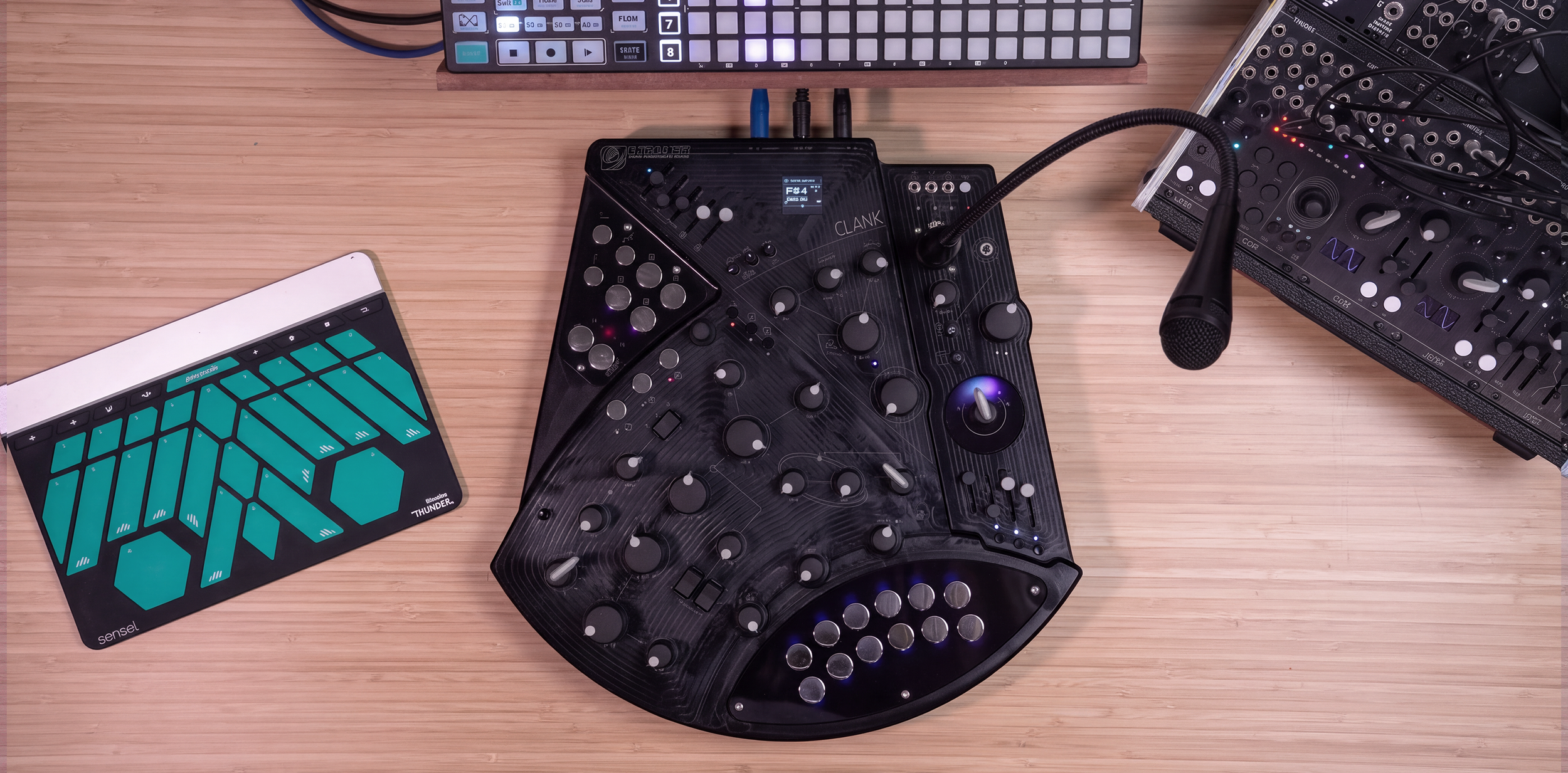
Uranograph is a self-contained instrument that also opens naturally into a wider creative environment. MIDI and MPE input let you play its synthesis engine from external keyboards, expressive controllers or your DAW, bringing its distinctive voice into your existing workflow. Connect via TRS MIDI or USB, with MPE supporting expressive control on a per-note basis.
The external audio input extends that environment further. A combo XLR/jack connection with a built-in preamp and phantom power accommodates sources ranging from microphones to line-level equipment. Bring another instrument into Uranograph’s effects and looper, processing incoming audio alongside the internal synthesis engine.
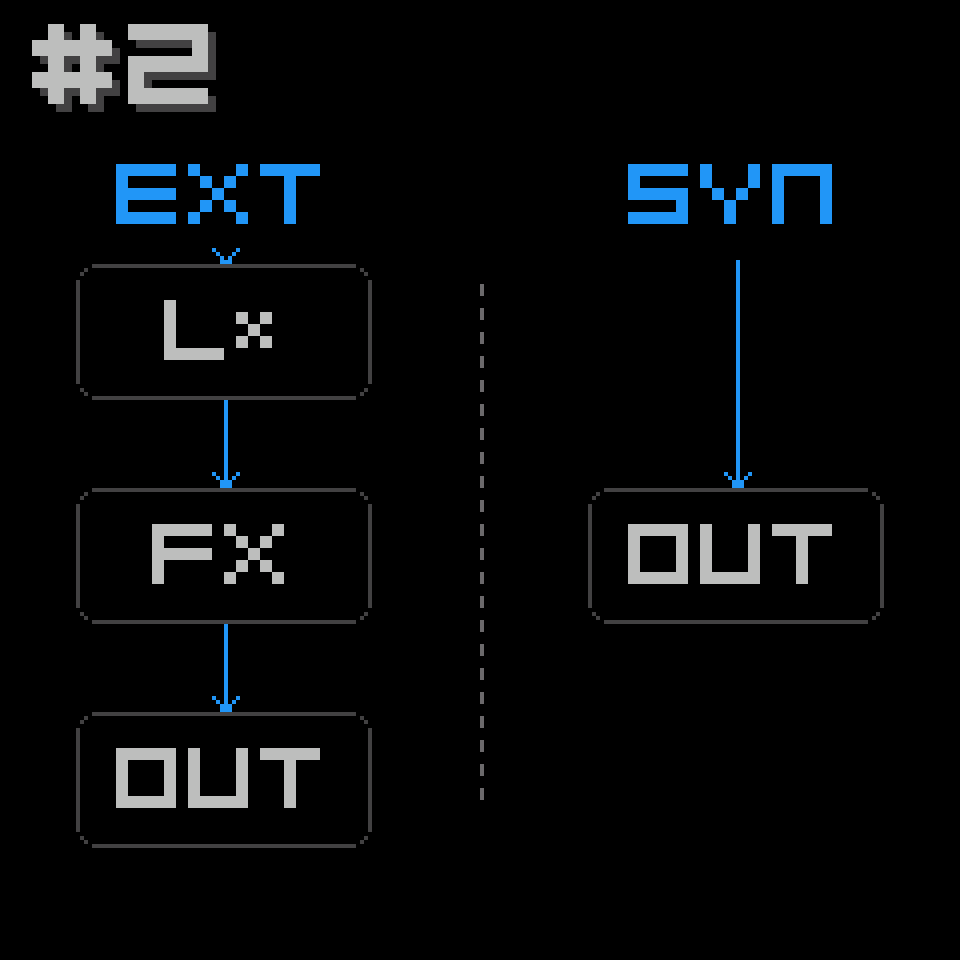
Flexible Synth Blocks Routing lets you configure how the internal synth, external input, effects and two-reel looper interact. Change where signals enter the processing chain and how they reach the loopers, opening up different approaches to recording, layering and live sound transformation.
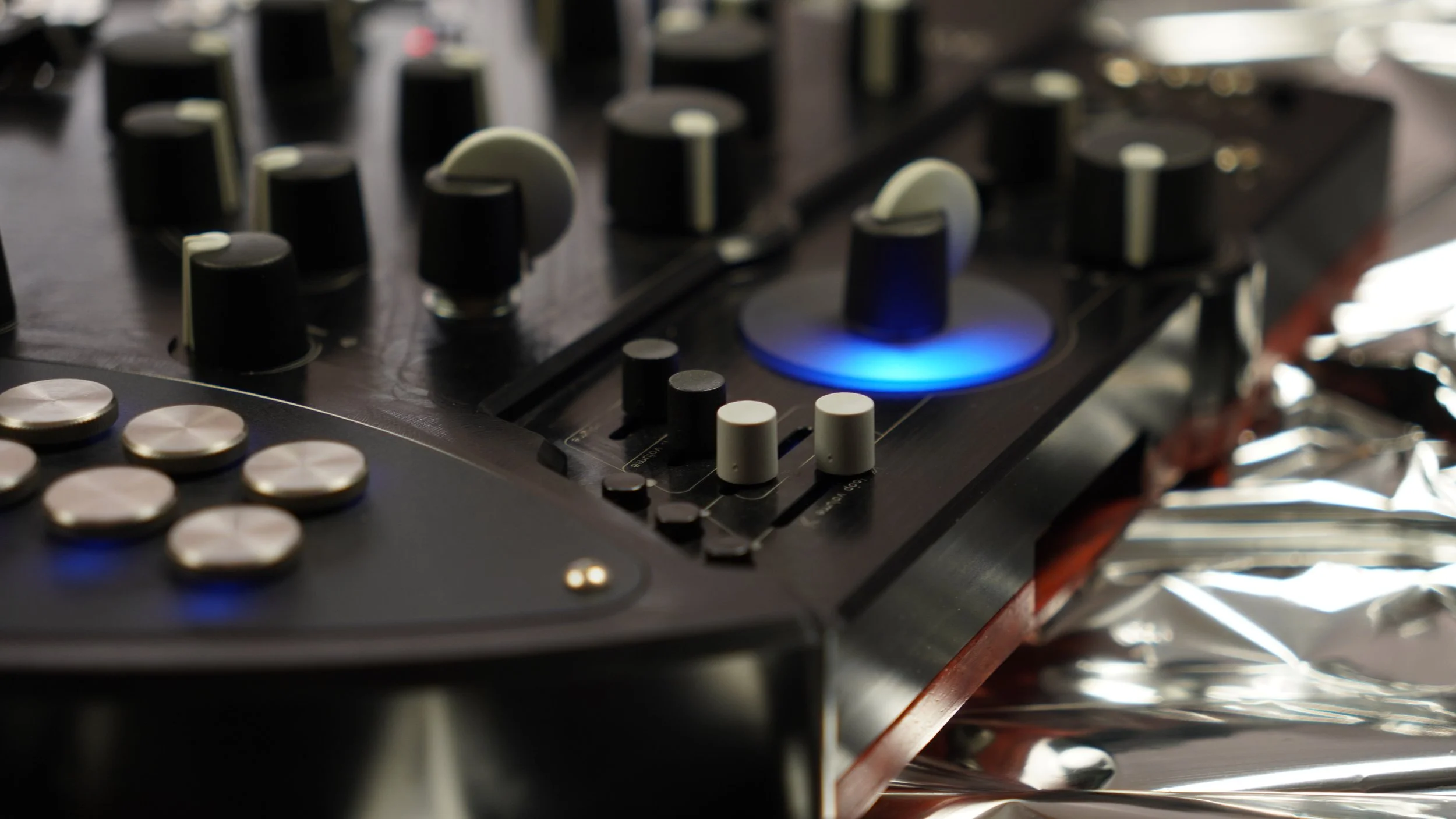
> technical specifications
Dual-CPU digital instrument with 24-bit codec
Precision CNC-machined from a solid aluminum block, anodized and laser-engraved for durability
350 × 360 mm dimensions
Stainless steel capacitive touch plates, offering long-lasting life
Touch-bend surfaces crafted from special opaline black plexiglass
VESA 75x75 M6 screws on the back
External input with XLR/6,3mm combo input with preamp and phantom power
High-quality headphones output via a 3.5mm jack, featuring a dedicated level control
Dual balanced line-level TRS outputs
1x combo 3,5mm analog clock IN/MIDI clock in
MIDI input (TRS / micro USB) with MPE
1x assignable CV in
1x 3,5mm analog clock OUT
Power: 15V center-positive DC adapter.
Keyboard pressure calibration
2x assignable expression plates
50 customizable Keyboard layouts
Monophonic or polyphonic modes
5x Oscillators synthesis core
1x Complex assignable LFO
1x Complex modulator oscillator
Three types of filters: LP, HP, BP
Stereo morphing delay
Six reverb algorithms
Two-reel performative advanced tape looper
Performative save and recall with a capacity of 384 presets
12 factory presets
Randomize function to quickly create new presets
Metronome for live performance, routed only to the headphones